Returning to Study While You Work? Here’s Your Survival Guide
Thinking about furthering your education while working full-time? You’re not alone. Many professionals reach a point where they want to grow their skills, move into better roles, or stay competitive in a fast-changing job market. But returning to study as an adult can feel overwhelming. You may be wondering how you will manage your time, keep up with your responsibilities, and still have a life outside of work and studying. The good news is, it’s possible. With the right programme, like MANCOSA’s flexible postgraduate qualifications, along with a good mindset, you can succeed without burning out. In this study guide for working professionals, we’ll walk you through what to expect, how to stay balanced, and practical tips to help you make the most of your learning journey.

Authors

MANCOSA
Ready to hit the books? Here’s what you need to know
Going back to college as a working adult can feel exciting and a little chaotic. You’re balancing deadlines at work, responsibilities at home, and now, assignments and exams too.
But more and more professionals are choosing this path to grow their careers and stay competitive. In fact, the
World Economic Forum reports that many jobs are changing fast, and workers need to keep learning new abilities to stay relevant.
This is why lifelong learning for professionals has become essential.
The lifelong learner mindset
Returning to study later in life isn’t a step backwards. It’s a smart move forward.
Unlike younger students, you bring real-world experience into your studies. You already understand how businesses work, how teams communicate, and how problems are solved. This makes learning deeper and more practical.
Choosing a postgraduate qualification part-time or on a self-paced basis also means you are investing in your future without putting your career on hold. It shows commitment, resilience, and a willingness to grow, qualities that employers value.
The benefits vs the drawbacks
There are many reasons why professionals return to study:
Benefits:
- Better career opportunities and promotions
- Higher earning potential over time
- Stronger confidence and expertise
- Personal satisfaction and growth
According to the Organisation for Economic Co-operation and Development, individuals with higher levels of
education tend to earn significantly more over their lifetimes than those without.
But it’s important to be honest about the challenges, too.
Drawbacks:
- Less free time for family and social life
- Mental and physical fatigue
- Pressure from balancing multiple responsibilities
Studying while working full-time is not easy. There will be days when you feel stretched. That’s normal. The key is to plan ahead and remind yourself why you started.
The time and financial commitment
Time management becomes your best friend when you return to study.
You’ll need to treat your study time like a work meeting, non-negotiable. Even a few focused hours per week can make a big difference.
Financial planning is just as important. Costs can include:
- Tuition fees
- Study materials
- Internet and technology
- Possible reduced work hours
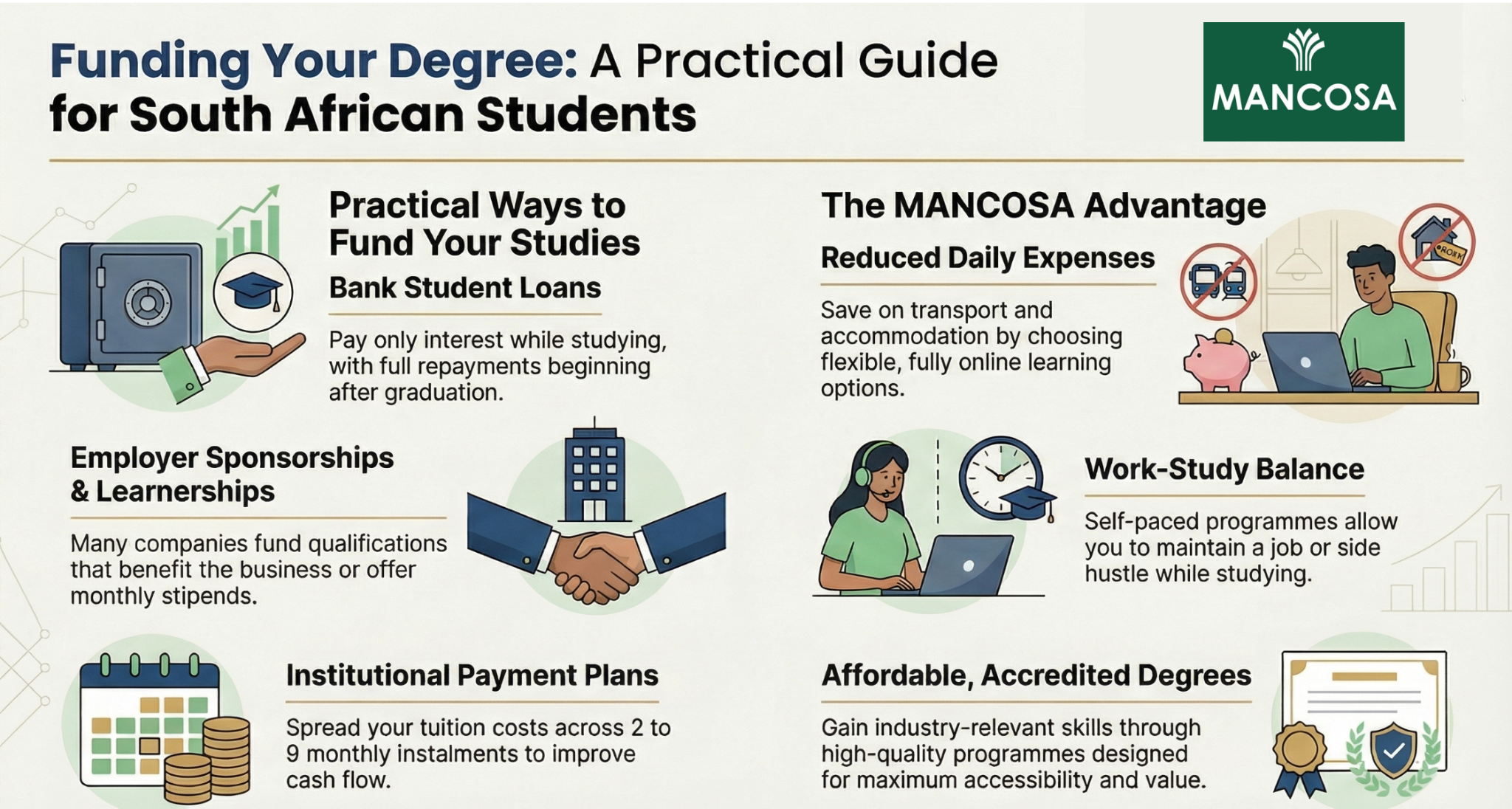
The good news? There are many college funding options for working adults available today. These may include payment plans, employer sponsorships, scholarships, or bursaries. Considering an MBA? Have a look at MBA
funding options and tips.
Our 7 full-time workers’ study guide tips to help ensure your success
Balancing work, study, and life is not about doing everything perfectly. It’s about creating a system that works for you. The tips below will help you stay consistent, productive, and, most importantly, avoid burnout.
According to studies, chronic stress can reduce memory, focus, and productivity. That’s why having the right approach to studying matters just as much as the studying itself.
1. Master your schedule with intention
Your time is limited. So you need to use it wisely.
One of the most important forms of effective time management for adult learners is planning your week in advance. Block out time for:
- Work
- Study sessions
- Family or personal time
Be specific. Instead of writing “study,” write “review Chapter 3” or “complete assignment draft.” Structured planning can improve productivity and reduce procrastination significantly. In other words, when you know exactly what to do, you are more likely to do it.
2. Communicate your commitment
Don’t try to do this alone.
Talk to your manager about your studies, especially during busy periods like exams. Let your family know when you need quiet time.
These small conversations can make a big difference. They’re key strategies for balancing work and studying, because they turn your environment into a support system instead of a source of stress.
3. Create a dedicated study space
Your environment shapes your focus. Try to study in the same place every time. This could be a desk, a quiet room, or even a corner of your home.
When your brain starts to associate that space with learning, it becomes easier to concentrate, even after a long workday.
4. Protect your energy (not just your time)
It might feel smart to cut sleep to get more done, but it usually backfires.
The Sleep Foundation explains that poor sleep affects memory, decision-making, and learning ability.
If you want to succeed long-term, focus on avoiding study burnout while working full-time by:
- Getting enough sleep
- Taking short breaks
- Moving your body regularly
A rested mind learns faster.
5. Use your institution’s tools
Most institutions offer online tools to help you succeed. These may include:
- Recorded lectures
- Online libraries
- Student support forums
Take time to learn how these systems work. They’re designed to make studying more flexible, especially for working professionals.
6. Build a support network
Studying can feel lonely, but it doesn’t have to be.
Joining a study guide group (even online) can help you:
- Stay accountable
- Understand difficult topics
- Stay motivated
Sometimes, just knowing others are on the same journey makes it easier to keep going.
7. Make use of small moments (micro-learning)
You don’t always need hours to study.
Use small pockets of time during your day to:
- Review notes
- Watch short lectures
- Test yourself with quick quizzes
These short sessions add up. Over a week, they can save you hours and keep your learning fresh.
Why studying at MANCOSA is a smart move for working professionals
Choosing where to study is just as important as deciding what to study, especially when you’re balancing work and further education.
MANCOSA stands out as a strong choice for working professionals looking to advance their careers without putting their lives on hold. Here’s why:
- Future-focused postgraduate studies: MANCOSA offers a wide range of postgraduate programmes, including Postgraduate Diplomas, Honours Degrees, and Master’s Degrees (such as MBA, MCom, and MPA).
- Designed for working professionals: All Postgraduate programmes are delivered through online or distance learning, which means you can study anytime and anywhere, continue working while studying, and learn at your own pace.
- Career-driven and industry-relevant: You’ll learn from experienced lecturers and industry professionals, and the curriculum is aligned with current market needs. This ensures that your qualification isn’t just theoretical, but practical and career-focused.
- Affordable and accessible education: Further study can feel expensive, but MANCOSA aims to make it more accessible. Their programmes are designed to be cost-effective, with flexible payment options available.
- Strong support throughout your journey: MANCOSA offers a supportive learning environment that includes academic guidance, technical support, and access to online learning tools.
FAQs
What is the best way to manage my time when I return to study?
The best approach is to plan your week in advance and treat study time like a fixed appointment. Block out specific hours for work, study, and personal time, and stick to them.
Break your tasks into smaller, clear goals (for example, “read one chapter” instead of “study”). This makes it easier to stay consistent and avoid feeling overwhelmed. Using calendars or planning apps can also help you stay organised and focused.
How can I avoid study burnout while working full-time?
To avoid burnout, focus on balance, not just productivity. Make sure you get enough sleep, take regular breaks, and schedule time to rest. It may feel tempting to study late into the night, but this often leads to poor concentration and fatigue.
Instead, work in short, focused sessions and build in recovery time. Staying active and asking for support when needed can also help you stay mentally and physically strong.
How long does it typically take to complete a postgraduate qualification part-time or as a self-paced learner?
The duration depends on the programme, but most part-time postgraduate courses take between 1 and 2 years. Postgraduate diplomas may take around 12 months, while master’s degrees can take 12 to 24 months.
Part-time study or self-paced learning allows you to continue working while gaining your qualification, making it a practical option for many professionals.
What support does MANCOSA offer to students who are studying while working full-time?
MANCOSA provides a range of support services designed specifically for working students. These include access to an online learning platform, recorded lectures, digital libraries, and academic support from lecturers.
Students can also benefit from flexible study options that allow them to learn at their own pace. This support system helps make studying while working full-time more manageable and achievable.
Register for a postgraduate qualification online
Returning to study while working is not the easiest path. But it is one of the most rewarding. It requires discipline, planning, and a clear reason for starting.
You’ve seen in this full-time workers’ study guide that building the right habits, creating a realistic schedule, and leaning on the support available to you, makes it more than possible to succeed without sacrificing your wellbeing.
Investing in your education is ultimately an investment in your future. With the right mindset and the right institution, you can grow your skills, expand your opportunities, and stay competitive in an ever-changing world.