Your Guide to a Career in Transportation and Logistics Management
Transportation and logistics management plays a vital role in everyday life. From food on supermarket shelves to online orders delivered to your door, efficient logistics systems make it all possible. This industry focuses on planning, moving, storing, and delivering goods in the most effective way. As global trade and e-commerce continue to grow, skilled logistics professionals are more important than ever. In South Africa and around the world, businesses rely on trained transportation and logistics managers to keep supply chains running smoothly. So, studying a BCom in Transportation and Logistics Management from an institution like MANCOSA is an excellent choice.

Authors

MANCOSA
This guide explores what a career in transportation and logistics management looks like, the skills you need to succeed, and how studying a recognised qualification can help you build a solid and future-ready career in this essential field.
Transportation and logistics management: what you should know about the industry
Logistics and transportation management is all about making sure products get from where they are made to where they are needed — on time, safely, and at the right cost.
This sector includes:
- Moving goods by road, rail, sea, and air
- Storing items in warehouses
- And planning the best routes and schedules
Ultimately, it’s a key part of the supply chain that keeps stores stocked, manufacturers producing, and customers happy.
Key industry trends
The importance of logistics management in South Africa is clear: the transport and logistics industry contributes a substantial amount to the country’s Gross Domestic Product (GDP) and supports jobs across key sectors like retail, mining, and manufacturing.
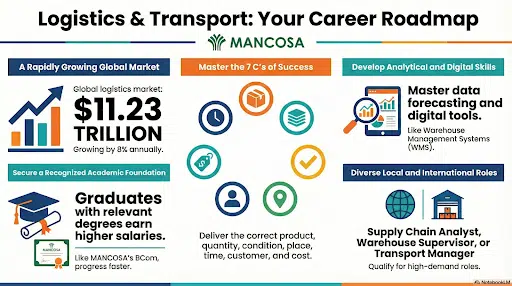
Globally, the logistics industry is huge and growing quickly. The worldwide logistics market was valued at about USD 11.23 trillion in 2025 and is expected to keep growing at around 8.05% per year through 2030.
This growth is driven by global trade, rising e-commerce, and advancements in technology like automation and real-time tracking.
Why choose a career in logistics and transport management
Choosing a career path in logistics and transportation means stepping into a world that is always in motion. There’s constant demand for skilled workers to plan routes, manage warehouses, coordinate shipments, and solve problems when delays or shortages happen.
This makes it a beneficial option for many students, offering job stability, variety, and opportunities to work both in South Africa and abroad.
Because supply chains are essential to everyday life — from groceries in shops to online purchases — professionals trained in logistics play an important role in helping businesses succeed.
Looking ahead, the future of transportation and logistics careers is positive. As technology evolves and global trade grows, logistics managers who understand digital tools, sustainable transport, and efficient supply networks will be in demand.
This makes logistics and transport management not only a practical choice but also an exciting one for people who enjoy problem-solving and global business.
5 Career tips for prospective transportation and logistics managers
Starting a career in logistics management can be exciting and rewarding. This industry plays a major role in keeping businesses and economies running smoothly. Below are five practical tips to help you prepare for success in this field.
1. Secure the right academic foundation
A formal qualification is the first and most important step.
A Degree such as a Bachelor of Commerce in Transportation and Logistics Management teaches you key topics like:
- Supply chain planning
- Transport economics
- Inventory control
- And procurement
Studies consistently show that graduates with relevant tertiary qualifications earn higher salaries and progress faster than those without formal training.
A strong academic base also improves your chances of securing entry-level roles in a competitive job market.
2. Master essential soft and hard skills
The skills needed for a logistics and transport manager include both technical and people skills.
- Analytical skills: You must be able to read data, plan routes, and forecast demand. For example, if a logistics manager reviews delivery data and identifies costly routes, they can switch to a combined road-and-rail option and cut company freight costs by 15%.
- Problem-solving and communication: Delays, supplier issues, and border disruptions happen often. Clear communication and quick thinking help keep goods moving and customers informed.
3. Embrace technology and digital tools
The future of transportation and logistics careers is digital. Employers expect knowledge of systems like:
- Warehouse Management Systems (WMS)
- Enterprise Resource Planning (ERP) software
- And route-planning tools
These systems help businesses improve efficiency and reduce costs, highlighting the importance of logistics management in South Africa and worldwide.
4. Gain practical experience through internships
Internships and entry-level roles in warehousing, freight forwarding, or distribution allow you to apply theory in real-world settings. This experience helps you understand daily operations and build confidence.
Plus, gaining practical skills (even while studying an online programme like MANCOSA’s BCom in Logistics Management) will help improve employability.
5. Network within the industry
Joining professional bodies like the Chartered Institute of Logistics and Transport (CILT) gives you access to mentors, industry insights, and job opportunities. Networking keeps you informed about new trends, regulations, and career paths in this fast-moving sector.
Plus, you’ll also often gain access to industry-specific job boards so you can find new job opportunities when they arise.
The benefits of studying transport and logistics management courses at MANCOSA
Studying a BCom in Transportation and Logistics Management at MANCOSA gives you the skills and knowledge needed to kickstart a prosperous career in this fast-growing field.
The programme is a three-year, NQF Level 7 qualification designed to help students understand how to manage and optimise the movement of goods, people, and supplies.
As such, it teaches you to manage supply chains both in South Africa and internationally.
With it, you’re well-prepared to take on roles such as:
- Transport logistics manager
- Supply chain analyst
- Warehouse operations supervisor
- And many more
One of the biggest advantages of studying at MANCOSA is flexibility. The programme supports online and distance learning, meaning you can study while you work or fulfil other responsibilities.
MANCOSA also offers robust student support services, including academic guidance, career resources, and mentorship opportunities.
Plus, if you’re interested in building further expertise, MANCOSA also offers related programmes like the Bachelor of Commerce Honours in Supply Chain Management and logistics-focused higher certificates that can help broaden your career options.
FAQs
What are the 7 C’s of logistics?
The 7 C’s of logistics are key principles used to ensure smooth and efficient supply chain operations.
They include delivering the Correct Product, in the Correct Quantity, in the Correct Condition, to the Correct Place, at the Correct Time, for the Correct Customer, and at the Correct Cost.
These principles help reduce waste, avoid delays, and improve customer satisfaction. They are a core part of effective logistics management and are widely applied in both local and global supply chains.
What does logistics and transport management entail?
Transportation management involves planning, organising, and controlling how goods move from suppliers to customers.
This includes freight forwarding, warehousing, inventory control, route optimisation, and managing returns. Professionals in this field ensure that products arrive on time and at the lowest possible cost, which is essential for business success.
What skills do you need to be a transportation manager?
The skills needed for a logistics and transport manager include strong analytical skills, problem-solving abilities, and clear communication.
Managers must also understand transport regulations, route-planning software, and supply chain systems. These skills are often developed through formal transport and logistics management courses.
How to start a career in logistics?
To start a career in logistics, it’s best to earn a recognised qualification such as a BCom in Logistics Management.
Gaining internships or entry-level experience and building industry connections can also help you grow faster.
Is logistics and transportation a good career?
Yes, logistics and transportation is an advantageous career choice. The industry supports global trade, e-commerce, and economic growth, offering diverse roles, long-term stability, and international opportunities.
Register for a BCom course in transportation and logistics management online
A career in transportation and logistics management offers good job prospects, long-term stability, and the opportunity to work in an industry that keeps economies moving.
From managing supply chains and transport networks to solving real-world problems in fast-paced environments, this field is both practical and rewarding.
As global trade and e-commerce continue to grow, the demand for skilled logistics professionals is expected to remain high.
By building the right skills and earning a recognised qualification, students can prepare themselves for a wide range of career paths in South Africa and internationally.
Have a look at MANCOSA’s BCom in Transportation and Logistics Management to see if it’s the right fit for you.